
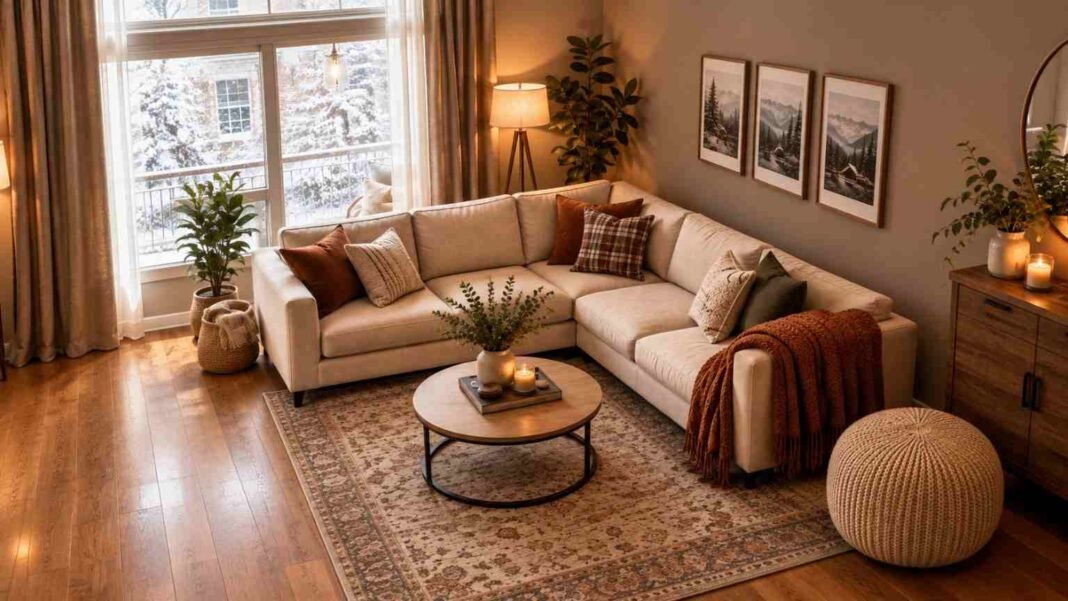
An improper furniture arrangement in an oddly shaped living room can make the space feel cramped, uncomfortable, and unbalanced. With cozy living room layouts, the living room layout can improve the decor of a small living room, keep walking space available, and create a living room layout where relaxation feels easy.
12 Cozy Living Room Layouts for Awkward Spaces Include:
1. Small Living Room Layouts
Choosing light and suitable furniture for small living rooms really makes the space feel open. Clear paths and simple décor help keep living rooms more comfortable and orderly.
Styling Tips:
- Select a sofa and a compact coffee table.
- Place a path between the door and the seating area.
- Create an openness with light colors and a large mirror.
Best For: Apartments, Studio Flats and Compact Living Rooms.
2. L-Shaped Layout
L-shaped seating effectively uses the corners of the room and creates a comfortable zone for seating. This setting gives a chance to add separate chairs and a sofa in a balanced way. Styling Tips:
- Place the L-shaped sofa with the corner.
- Place the coffee table close to both seating directions.
- Add the Floor Lamp or Little Side Table to the corner.
Best For: Rectangular rooms, empty corner living rooms, and family sittings.
3. Floating Sofa Layout
Keeping the sofa away from the wall creates a separate zone in an open plan or large room. This layout makes the room feel more personal and interesting.
Styling Tips
- Leave a minimum walking space behind the sofa.
- Complete the back of the sofa by placing the console table.
- Clarify the seat area by using small area rugs
Best For: Open plans or large living rooms.
4. Narrow Living Room Layout
Furniture in a room should be placed in a way that does not stop people from walking through the space. Using furniture that’s not deep and keeping the look open can help the room feel more even and well-balanced
Styling Tips
- Put the sofa in the direction along the length of the room.
- Pick seating instead of big armchairs.
- Do not put furniture in front of a door or the main path.
Best For: Narrow rooms, hallway-like living rooms and small spaces.
5. Open Plan Layout
When designing an open plan living room, it is possible to define the seating zone through furniture placement. This is achieved by the use of a rug, sofa, and lights that serve as boundaries without building a solid wall.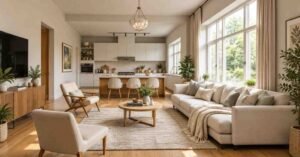
Styling Tips
- Create natural boundaries using the sofa.
- Lay a rug under the seating arrangement.
- Illuminate the zone using floor lamps or pendants.
Best For: Open plan apartments and living and dining zones.
6. Layout of a Small Apartment
In a small apartment, each item of furniture should be used to fulfill some function such that no space goes to waste. Flexible seating furniture and multi-functional furniture help to meet both practical needs and comfort.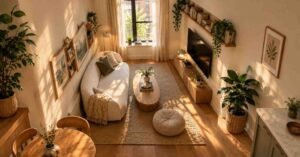
Styling Tips
- Use an ottoman for storage or folding furniture.
- Go for a small couch and a lightweight chair.
- Vertical storage helps save floor space.
Best For: Studio Apartments and Rental Houses.
7. Conversation-Friendly Layout
When the sofa and chairs face one another in a conversation-setting, it becomes simple to talk with guests while still keeping a suitable distance for comfort and flow.
Styling Tips
- Position the chairs directly in front of the sofa or at an angle.
- Keep the coffee table within reach for everyone.
- Keep a passageway between the seats.
Best For: Living rooms that host guests and family seating.
8. Living Room Furniture Layout Around Fireplaces
Putting the furniture around the fireplace or another main feature can help make a center for the room. Make sure that the view, comfort, and safety all work together in this setup.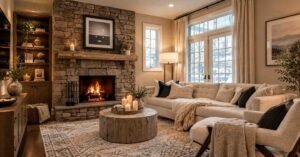
Styling Tips
- Be sure to balance the way sofas and chairs are placed around the fireplace.
- Remember to think about the distance.
- Try to keep the number of items on the mantel to a minimum.
Best For: Houses with fireplaces, living rooms, in cold climate regions, classic interiors.
9. Layout That Works With Windows
Putting furniture near a window helps make the most of the light and the view outside. A big sofa or tall shelves can make a room feel too heavy if they block the window.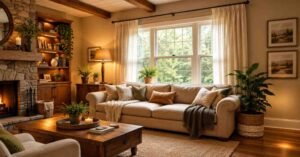
Styling Tips
- Put furniture that is not very tall in front of the window.
- Use curtains that’re light to make the light softer.
- Put the chair you read in near the window where there is light.
Best For: Rooms that’re bright house with nice views and places that have big windows.
10. Multi-Functional Layout
The Multi-Functional Layout lets me switch between relaxing, reading, working, or entertaining guests as long as the furniture can move easily. By setting up zones for each activity, the Multi-Functional Layout feels more useful.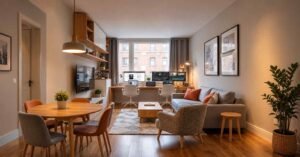 Styling Tips
- Keeping a work desk near the sofa helps me stay productive while still feeling relaxed.
- Move the side table whenever you need to create space for a gathering or a quiet corner.
- Use lights that are bright for reading and soft for relaxing. The mood shifts with your activity.
Best For: Work-from-home homes, small apartments, and multi-purpose rooms.
11. Wall-Hugging Layout
In some rooms, putting sofas and chairs next to the walls can free up space in the middle. However,r it is not required to stick every piece of furniture to the wall, ll as the space might be better suited depending on the size and flow of the room.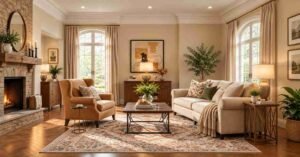
Styling Tips
- Put the sofa in harmony with the wall.
- Do not add furniture in the middle.
- Keep a clear center area for moving and for a balanced look.
Best For: square rooms, homes with children, and spaces that need a clear center area.
12. Cozy Reading Corner Layout
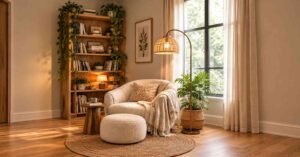
A small reading corner can add comfort and personal use space to the living room. With a comfortable chair, proper lighting, and a compact side table, this corner can be prepared without loading the room.
Styling Tips
- Place the comfortable chair near the window or in a quiet corner.
- Place the reading lamp within easy access of the chair’s hand.
- Add a small shelf or side table for books.
Best For: Book lovers, little reading corners, and quiet home spaces.
Common Mistakes To Avoid
Pay attention to practical use along with beauty while creating a living room layout. The room can be made more comfortable and balanced by avoiding a few common mistakes.
- Keep the size of the sofa and coffee table according to the capacity of the room.
- Do not block doors, windows, or daily traffic routes with furniture.
- A little distance in some rooms makes a more balanced seating arrangement.
- Just add pieces that really help with rest or practical use.
- Add a window, fireplace, or prominent architectural feature to the order.
Frequently Asked Questions(FAQ’s)
Question #1: How to choose a cozy living room layout for a small space?
Answer: Choose a small sofa, suitable furniture, and clear paths so that the room feels open and comfortable.
Question #2: How to create a cozy living room layout in a strangely shaped room?
Answer: Use an L-shaped sofa or different seating zones to better use the corners.
Question #3: Where should the sofa be placed in a cozy living room layout?
Answer: Keep the sofa keeping in mind the window, focal point, and room routes to maintain comfort and movement.
Question #4: Which furniture is necessary in a cozy living room layout?
Answer: An adequately sized sofa, coffee table, comfortable lighting, and limited décor help to create a balanced living room.
Question #5: How can the layout of the comfortable living room be made more cozy?
Answer: Add soft cushions, warm lights, textured rugs, and weather according to the weather so that the room feels more comfortable.
Final Thoughts
A good cozy living room layout is not just a name for keeping furniture, but a way of creating a balance between comfort, movement, and daily needs. Keep your room size, shape, light, and usage in mind when choosing a cozy living room layout. Whether the space is small or odd, a thoughtful arrangement can make your home more comfortable and beautiful.
